Welcome to the Creativity Action Research Resource. This resource is designed to support teachers, creative practitioners and schools to develop their practice in facilitating students’ creative skills.
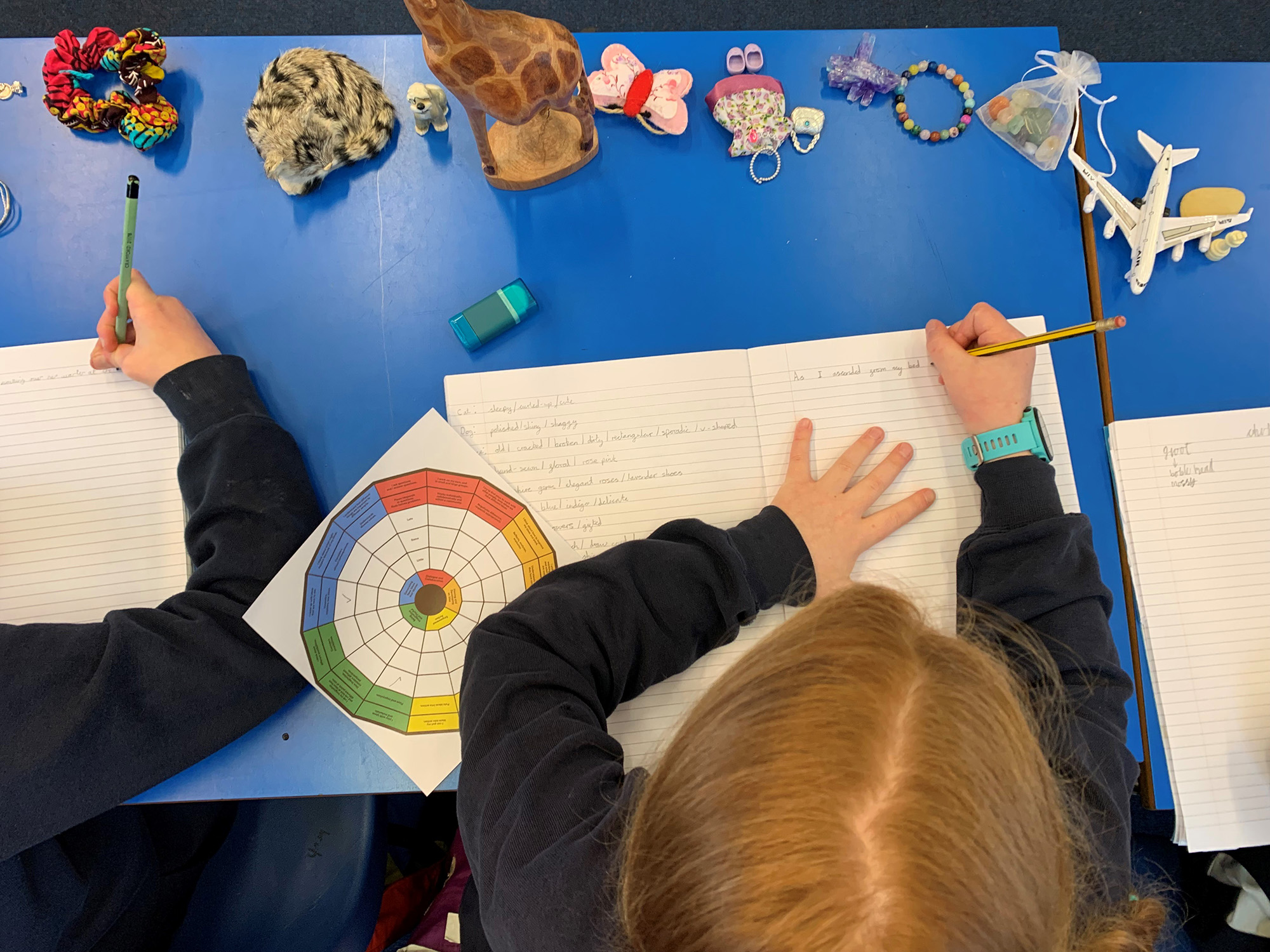
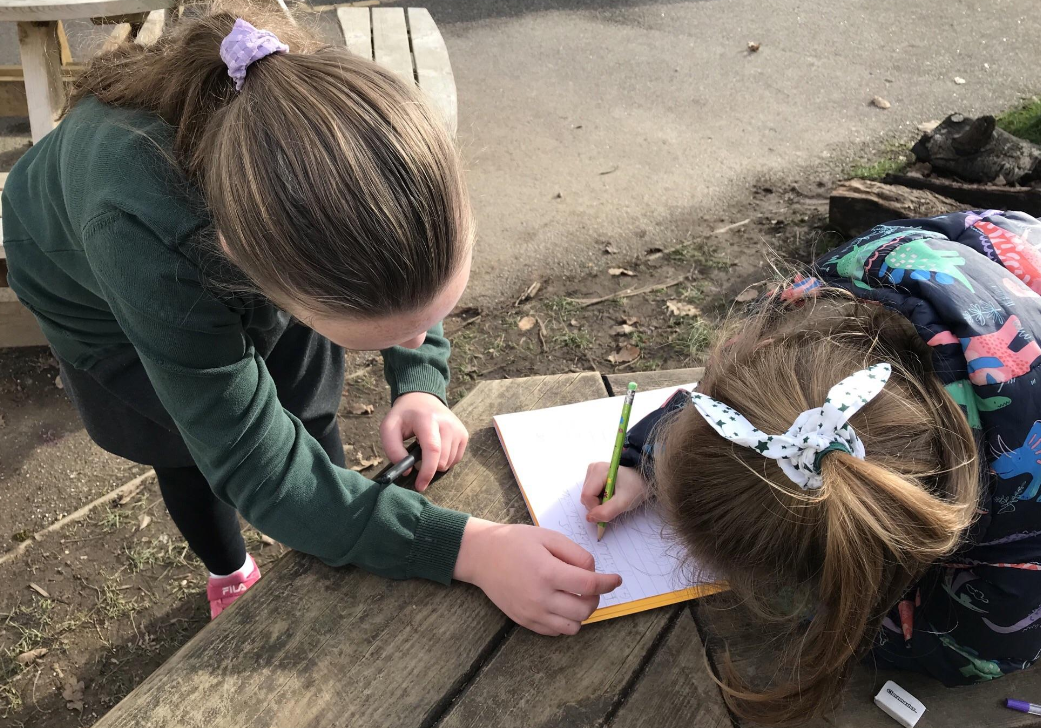
It has been developed by researchers at the University of Exeter with input from teachers in schools in Penryn in Cornwall based on their action research together. Through the Penryn Creativity Collaborative Pilot Project, a three-year Arts Council England funded programme, teachers cultivated their own practices in teaching creative skills across the curriculum from early years through to GCSE levels. Their research projects also impacted whole school culture, curriculum and strategy, leadership, partnership working, assessment, CPD and careers. As well as informing the approach, this project is drawn on throughout the Resource, providing real-life examples of different stages of the Action Research process. Find out more about their research on the Example CARR Research page.
Who is the resource for?
The resource has been developed with teachers in primary and secondary schools, and it can be used by any educators or facilitators of creative practice – for example to support creative science collaborations with schools, or artist-collaborators.
What does it include?
It includes a series of eleven modules that will guide you through one cycle of action research. You can conduct this in your classroom as part of your usual teaching. About Action Research provides an overview of the action research process. Subsequent modules help you prepare for your action research, and then guide you through a process of planning, doing, reflecting and reviewing. Completing this process will help you develop your understanding of creative skills and creative pedagogy. You will develop a research question that you want to explore in relation to this, design an activity to help you explore it, and collect and analyse data to reflect on it. Because the research all takes place in the classroom, any practice you develop will be directly applicable to your ongoing teaching or creative practice.
Modules follow a logical sequence, but as with all research, the process is unlikely to be linear: the resource is designed so you can move freely around it to support your own process. We also recommend three specific pathways of different lengths:
5 hours research-informed reflective practice
This pathway has been developed as a 5-hour model, but can take considerably longer: take care to allocate the time you have available across the activities, leaving at least 2 hours for analysis.
| Possible timeline | ||
|---|---|---|
| PREPARE | Understanding Creativity | Before term begins |
| PLAN | Research Design, Activity 2: Developing your research question | Before term begins |
| DO/REFLECT | Analysis, Activity 1: Using Brookfields’ Four Lenses to Reflect on Research Data | Select a lesson/ activity to reflect on, and complete the reflection: First half of term |
| REVIEW | Reporting, Activity 2: Producing your Report | Second half of term |
| REPEAT… | This cycle could be repeated each term, or in future years | |
25 hours action research
This will enable you to complete the whole cycle. Allow yourself approximately 2 hours per module. Some sections will take less than 2 hours – for example reading this introduction! Some will take more – we recommend that you allow additional time for the analysis section. Assuming a three-term year, we suggest you structure your action research as follows:
| Possible timeline | ||
|---|---|---|
| PREPARE | About Action Research & Understanding Creativity | Autumn term |
| PLAN | Partnership, Research Design & Understanding context | Autumn term |
| PLAN/ DO | Ethics & Data Collection | Spring term |
| REFLECT | Analysis, Analyse data using Activity 1 | Summer term |
| REVIEW | Reporting & Sharing and Applying | Summer term |
| REPEAT… | Now refine your question and plan your next cycle… | Summer term |
40 hour-plus action research – all activity with time for a full analysis
Recommended version for research intended for publication, and for collaboration with University partners: find out more about working with the University of Exeter. The following timeline works well across an academic year; a four-term version will further support depth of practice, with the PREPARE stage taking place in the preceding summer term.
| Possible timeline | ||
|---|---|---|
| PREPARE | About Action Research & Understanding Creativity | Autumn term |
| PLAN | Partnership, Research Design & Understanding context | Autumn term |
| PLAN/ DO | Ethics & Data Collection | Spring term |
| REFLECT | Analysis, Analyse data using Activity 2 | Summer term |
| REVIEW | Reporting & Sharing and Applying | Summer term |
| REPEAT… | Now refine your question and plan your next cycle… | Summer term |
Dialogue and collaboration
The resource uses a dialogic model of practice, based on partnership working. A dialogue partner or community of practice is needed who can be one of the following:
- a creative partner (for example an industry partner or creative practitioner),
- other teachers in your school who are also doing action research,
- a mentor, coach or line manager who can support you to reflect.
This process can be supplemented by AI, although it is also important to connect with professional colleagues.
Key moments for dialogue time are flagged throughout. These are the points at which you should arrange to meet with your dialogue partner or group and work together on an aspect of the research.
Embedding action research in your school / organisation
Action Research is an approach to developing professional practice that many schools and other organisations already use. If you are new to it, you will need to consider how it fits within your overall organisational structure. In a school, it may sit within a single faculty or department (secondary) or key stage (primary), within a coaching or CPD programme, or it might be linked to teacher progression targets. In an arts organisation it may sit within an Education and Community team, Creative Learning programme or similar. Either way, to embed it successfully, it will be important to have support from senior leadership, for example a head teacher, head of programme, lead practitioner, CPD lead or other senior member of staff.
If this is your first experience of action research as a practitioner, or as an organisation, you may like to start with a simpler version (try out the 5-hour model for instance), and then supplement and develop this in future years. Working with a University partner will also help support this process – find out more about working with the University of Exeter to support your action research.
If you are supporting members of staff who are new to action research, giving them experience of the shorter version, of a single module, or allowing them to first observe other members of staff completing action research may help to scaffold their path into this way of working.
Introduction to the Research Journal
Several of the activities link to a Research Journal activity. Each of these involves completing a downloadable document. You will need to set up a secure folder on your computer where you can store all of these together. You will also put your research data in here when you collect it.
We also invite you to use a Research Diary for your own reflection. Please download this here, store it in your Research Journal folder, and use it throughout your research.
About the authors
Kerry is a Professor in the School of Education at the University of Exeter, UK, where her research focuses on creativity in education, specifically in the arts (dance) and transdisciplinary settings. She co-leads the Centre for Research in Transdisciplinary Education, the Creativity and Emergent Educational futures Network and the MA Creative Arts in Education Programme. She is also an Adjunct Professor at the Western Norway University of Applied Sciences. She is passionate about facilitating creativity between practice and theory, and believes that is for everybody.
Ursula has worked extensively with schools and artists developing creative practice. She is Creative Learning Lead for Wigmore Hall, a concert hall in London, and works at the University of Exeter on research projects in the School of Education focused on arts, creativity and educational futures. She has also taught at the University on the MA Creative Arts in Education and recently completed a PhD focusing on creative music workshop practices.
The Penryn Creativity Collaborative lead is Sarah Childs, Assistant Headteacher at Penryn College, Cornwall. Sarah joined Penryn College in 2003 as Head of Music moving to Head of Creative Arts from 2005 and then as a Specialist Leader in Education delivering CPD across the county. Applying her expertise from the Creativity Collaboratives lead role, Sarah shares practice in teaching for creativity regionally and nationally, and is passionate to support others to develop change in their schools.
We would like to thank teachers from schools across the Penryn Partnership Schools who have informed the development of the resource, trying out activities, providing feedback, making their own version of different activities in their schools, and providing the completed versions of Action Research activities that we have shared throughout. We are similarly grateful to the cohort of practitioners outside of the Penryn Partnership who generously helped us to trial the resource website and hone this final version to be as accessible as possible.
If you are interested in commissioning support for your action research project from a University team, visit the page Work with Us.