PREPARE
Understanding Creativity
- Define creativity in your practice
- Define and develop your creative pedagogies
Introduction
Our main purpose in this resource is to offer you ways to research and develop staff and student creativity in practice. Using action research to develop practice in this way begins with gaining as good an understanding as you can of the core topic of creativity before you begin your research. We offer you a clear starting point on this journey through the following resources which build on our work in the field including the Penryn Creativity Collaborative project:
- Creativity definition and five accompanying core creative skills
- Eight creative pedagogies and their relationship to the creative skills
- Creative skills progression framework
It’s vital to remember that creativity can happen in any subject; you may use the arts to catalyse understanding of creativity in other subjects, but every subject is and can be creative. You can see from the resources that we define creativity, in any subject, as:
Imaginatively generating and developing new ideas, processes and products that matter, through empowered action, dialogue and collaboration.
To unpack what this looks like for students in the classroom we have broken this down into five creative skills with each skill broken down into three subskills:
- Dialogue and collaboration
- Being imaginative and playful
- Generating new ideas that matter
- Honing and developing ideas
- Empowered action
To unpack what creative facilitation looks like for you as a practitioner we have developed a framework of eight creative pedagogies, as follows:
- Teacher creativity/wisdom
- Empowerment, autonomy and agency
- Ethics and trusteeship
- Risk, immersion and play
- Possibilities
- Generating and exploring ideas
- Problem solving
- Individual, collaborative and communal activities for change
We purposefully place teacher creativity at the top of this list, as without this, it is impossible to facilitate student creativity. It’s important to remember that these skills and pedagogies do not happen in isolation but it’s possible to see elements of them entwined within students’ learning. The skills and pedagogies are offered in this way to help you to understand both how you can develop them in a scaffolded way and how you can break them down to research them. In your own research you do not need to adopt this model of creativity as it stands, or in full, but we will refer to it throughout in order to prompt careful reflection on your own understanding of this multi-dimensional concept.
Activity: What is creativity and how do I encourage it?
Different people find their way into understanding what creativity is for them in different ways, so we offer you a number of avenues for you to kick off your own definition of creativity in this activity.
If you are working with a Dialogue Partner or group, we would recommend doing this exercise together so that you can support each other and share outcomes. Alternatively, you can complete the task on your own.
Quick fire definition
Think about yourself being creative. Either using a digital tool like Jamboard or Padlet, or your Research Diary, write down five words or pull together five images which sum up your creativity.
Think about your students being creative. Again, write down five words or pull together five images which sum up their creativity. Can you also identify your teaching actions around their creativity?
Developing your definition
Now pinpoint this to a specific example of the last time you remember being creative. This might be in the classroom or in another aspect of your life. Set yourself a timer and write about that example without stopping typing or taking your hand off the paper.
Now pinpoint the example of your students’ creativity. Again, set yourself a timer and write about that example without stopping typing or taking your hand off the paper. Include your own teaching actions too.
Connecting your definition to the skills and pedagogies
Now look at the Creative Skills and Pedagogies framework; look carefully at the five skills, eight pedagogies and their elements. Annotate your two examples with this language. Where are you already using the creative skills and pedagogies language? Which of the creative skills and pedagogies have you not touched upon? Think about what is present and what is not; what does this tell you about how you think about creativity and what elements of it you might want to investigate more closely? This might either be elements that are already in your examples or those that are not.
EXTENSION: The Penryn Creativity Collaborative Creative Skills have been broken down further into a Progression Grid. You may like to use the language from this grid appropriate to the specific age group that you are working with.
Reflection: These descriptions of how creativity might manifest at different curricular stages is driven by the curriculum. Consider how features such as play and imagination which tend to be favoured in earlier stages of the curriculum can also be cultivated at later stages.
Pick your media and capture your thinking!
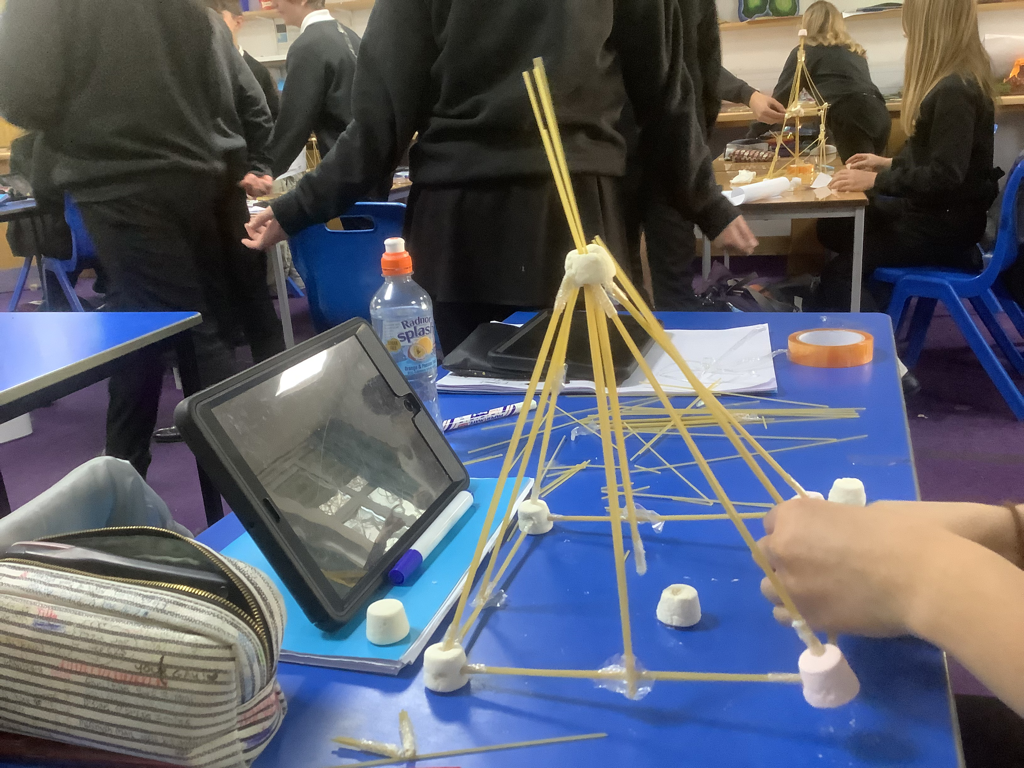
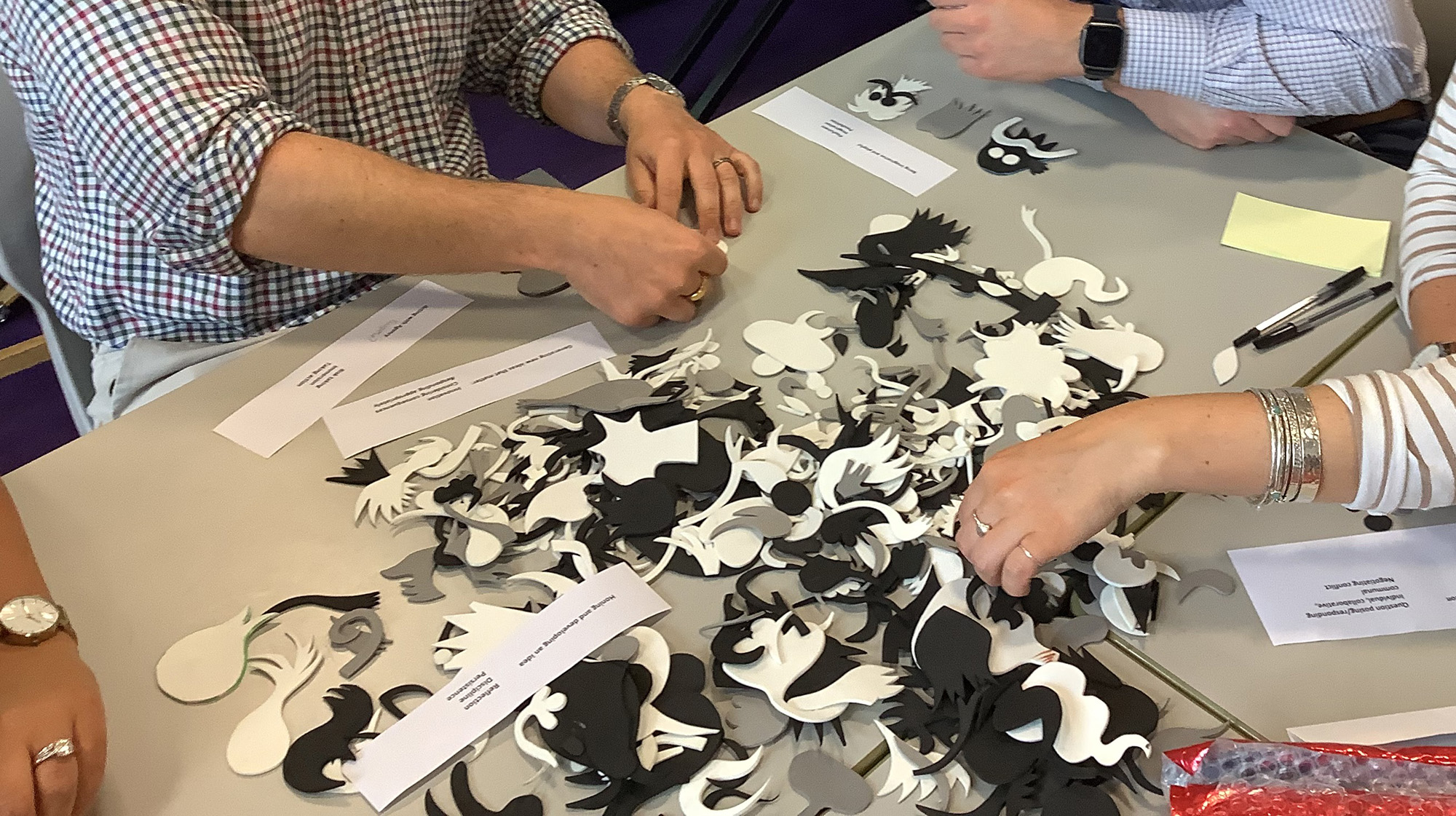
- Find materials that you feel comfortable working with. This might be lego, play dough, drawing pencils, found natural objects, found household objects or even dance/movement or soundscaping.
- From the tasks above, select the elements of the creative skills or pedagogies which you would like to investigate further.
- Make a collage, drawing, sculpture, film a movement piece, record a soundscape that represents the skill/s and or pedagogy/ies for you. Photograph, film or record this so that you have a record in your Research Journal.
- Transfer this into the research focus section of the Research Journal Research Design Template: you’ll come back to this in the Research Design module.
Take this into conversation with the literature
You now have your creativity research topic and can take it into conversation with the literature by working through the Understanding Context module.
Further reading
Chappell, K., Cremin, T. & Crickmay, U. (in press 2026). Creative Pedagogies in school. In B. Lucas, E.Spencer & P. Sowden (Eds.) Handbook of Creativity in Schools. Edward Elgar Publishing.
Camtree: The Cambridge Teacher Researcher Exchange. This is a high quality platform that helps teachers and educational leaders share their knowledge and research. If you sign up you will be able to read a variety of open access publications focused on creativity by using the database search tool.
Crickmay, U., Childs, S., & Chappell, K. (2023). Creativity Collaboratives Penryn Partnership Year 1 Report: Question, Challenge and Explore. Penryn College. This publication contains the PCC literature review of creativity; there is also a shorter version of this available in the Executive Summary section of this report.
Van Veen, E., Manclack, H., Laing, B. & Childs, S. (2024). What do we learn about assessment from Penryn Creativity Collaborative.
FAQs
I’m doing the activity and I’m worried that I’m not creative
Remember being creative is not about being artistic. Try to move beyond that way of thinking about creativity. Perhaps your example of being creative is you in your garden, tinkering with the engine on your car, doing crossword puzzles, making unusual meals, finding imaginative ways to get a student through an assessment. Everyone is creative, it’s just about tapping into your version of it.
There are too many skills and pedagogies!
You can’t possibly carry out your research on all five skills and all eight pedagogies. Look at the PCC action research and you’ll see that teachers focused in on the skills or pedagogies – sometimes just one! – that were most relevant to them and their current classroom practice. It’s not possible to ‘dissect out’ a skill or pedagogy but you can put the spotlight on it for your research to develop that area of your practice.